The Products You Make. The Labels They Need.
Find custom self-adhesive labels by equipment type. Explore typical applications, then review the materials and markings your product needs with TY Label.
Find Your Industry
Explore the labels used across your products.
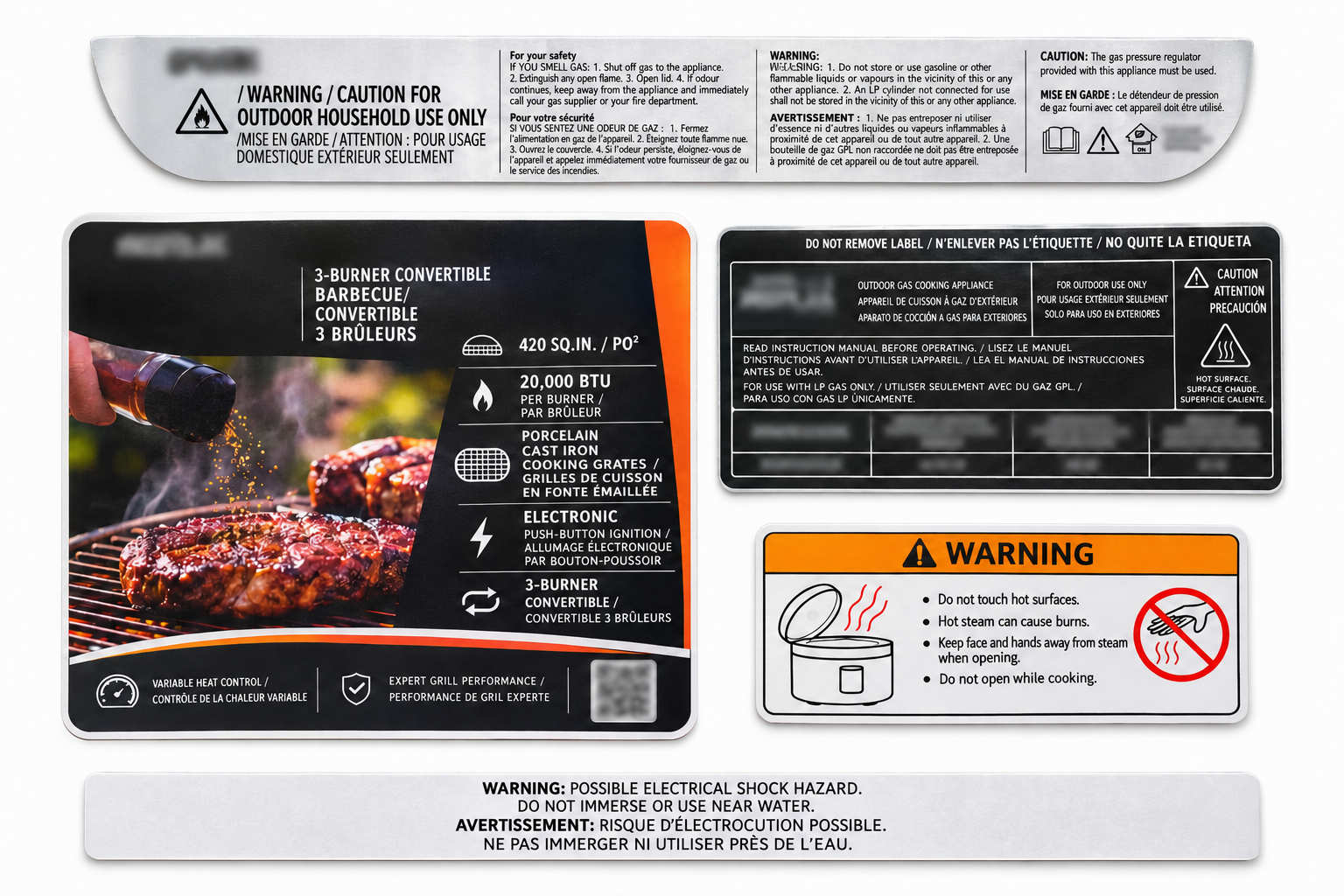
Cooking Appliances
Rating, warning and operating labels for grills, ovens and countertop appliances.
Explore Label Applications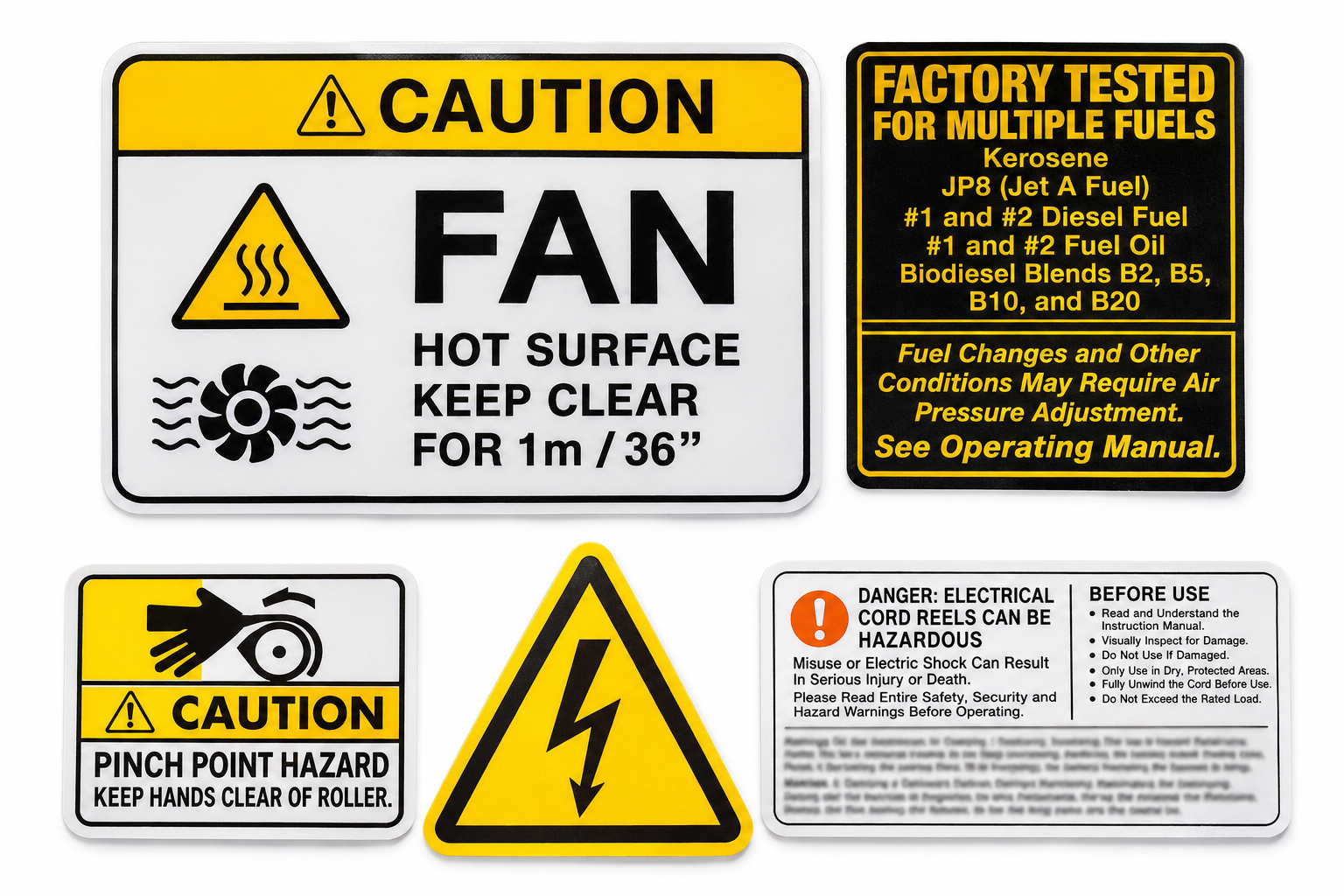
Garden & Outdoor Tools
Equipment identification and safety labels for outdoor tools and garden equipment.
Explore Label Applications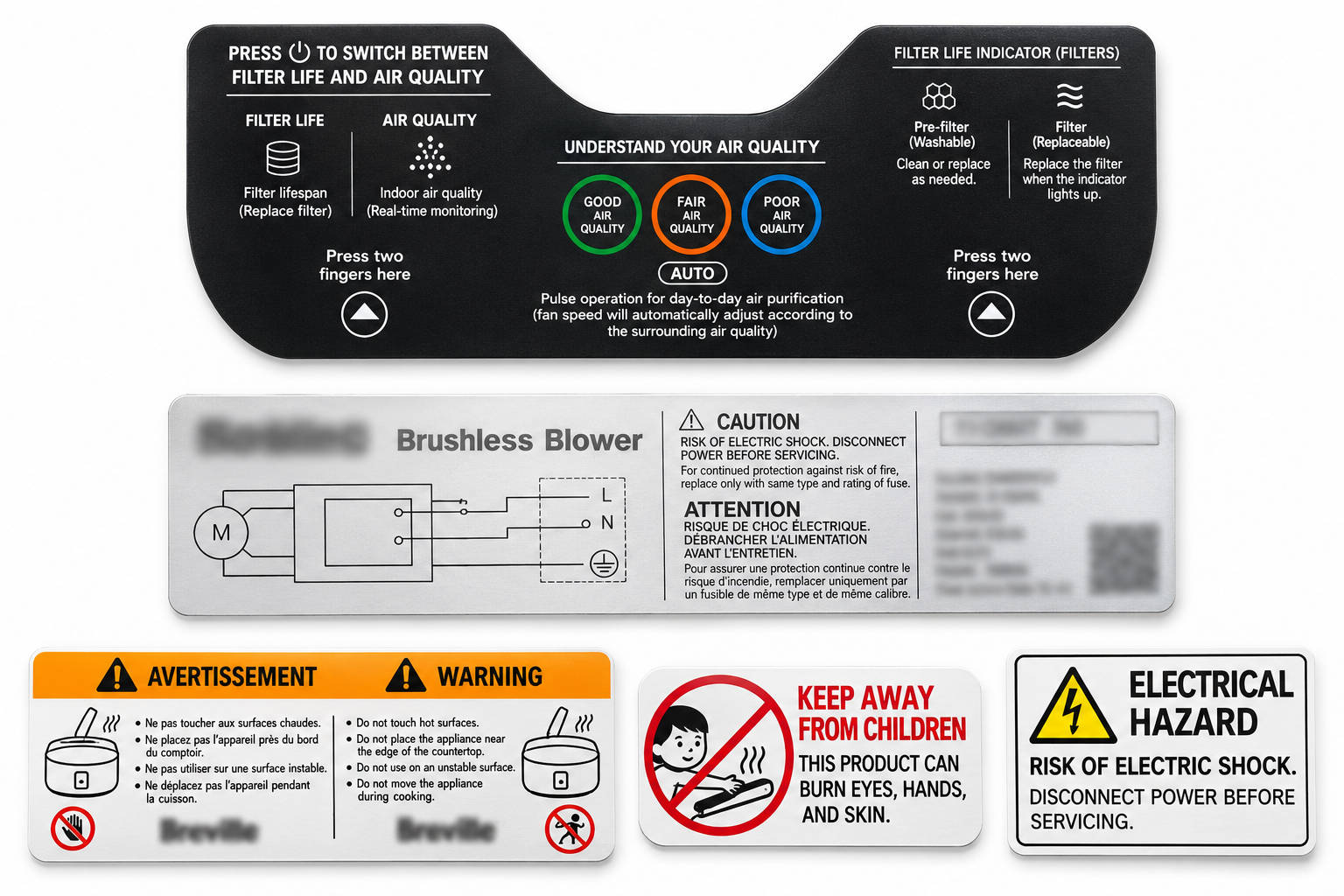
Smart Home & Appliances
Product identification, operating instructions and warnings for household appliances.
Explore Label Applications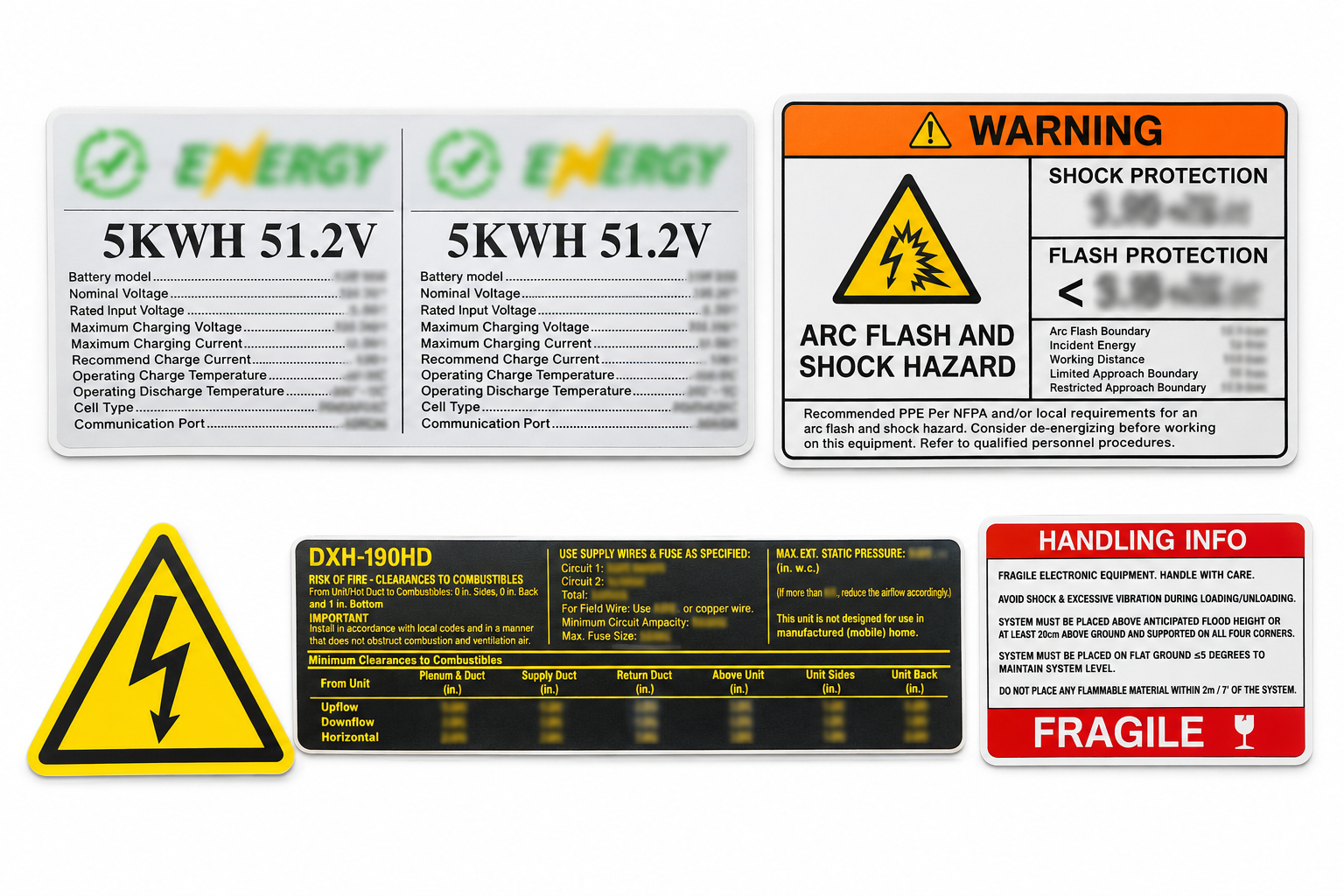
Power & Energy Storage
Specification, electrical warning and traceability labels for modules and cabinets.
Explore Label Applications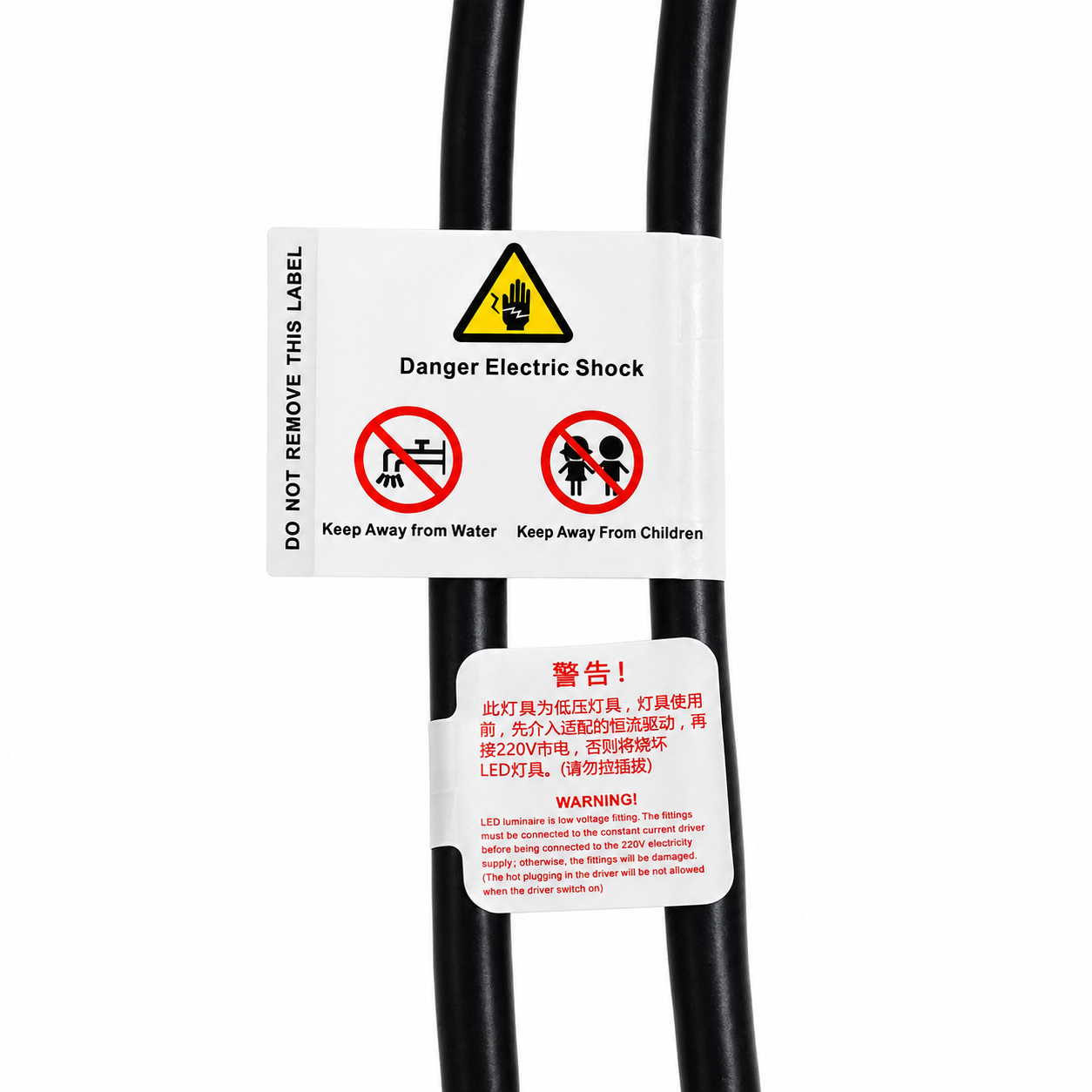
Power Cords & Wire Harnesses
Flag, folded and wrap labels for cord warnings and wire identification.
Explore Label Applications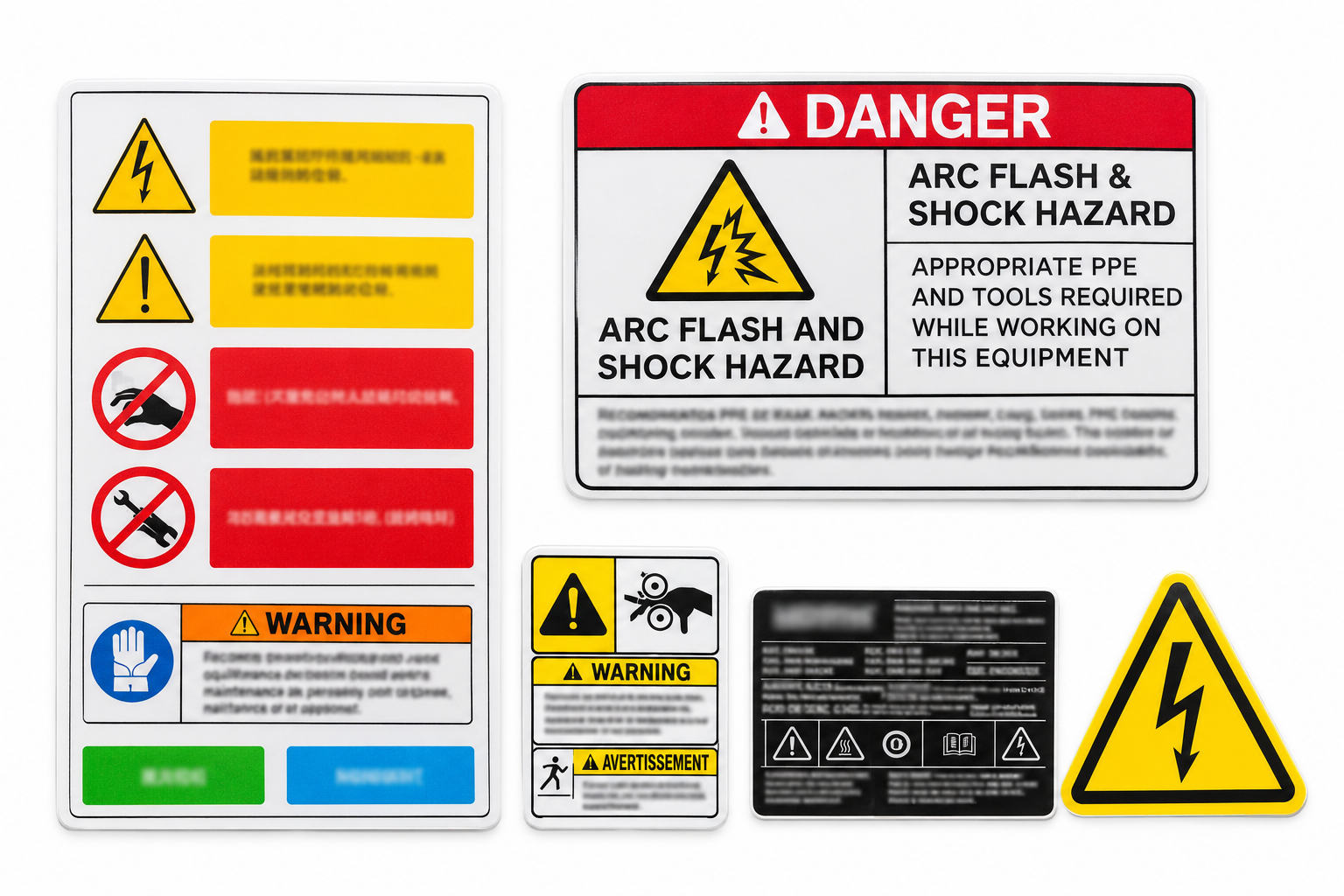
Industrial Automation
Equipment identification and safety labels for machines, robots and components.
Explore Label Applications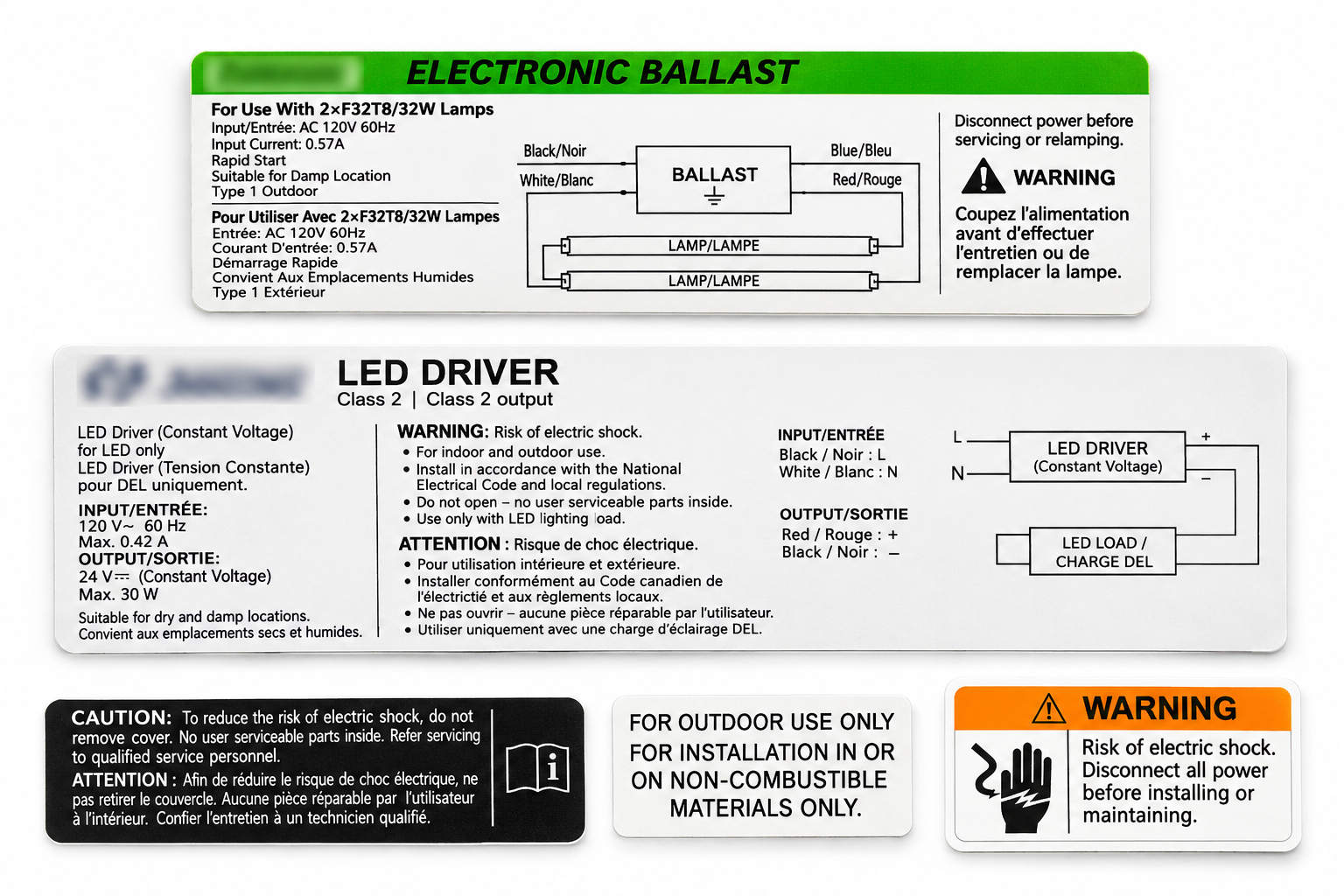
Lighting
Rating, wiring and warning labels for luminaires, drivers and power leads.
Explore Label ApplicationsAnother Industry?
Tell us what you make and where your labels will be applied.
Talk to Our Team
Match the Label to Its Job
One product can need several labels. Start with where each one goes and what it must communicate. Material and recognition requirements depend on the specific label construction and conditions of use.
| Label & Location | Information to Include | What to Confirm |
|---|---|---|
| Rating & Compliance Equipment housings and rating plates | Model details, electrical ratings and approved markings. | Application surface, temperatures and relevant recognition records. |
| Warnings & Instructions Safety points and operating areas | Hazard messages, operating instructions and safety symbols. | Approved wording, language versions and label position. |
| Identification & Traceability Products, components and packaging | Serial numbers, barcodes, QR codes and batch information. | Data format, scanning needs and who prints variable data. |
| Wire & Cable Marking Cords, harnesses and connections | Cable identification, electrical information and warnings. | Jacket material, cable diameter and label fit. |
From Your Equipment to a Custom Label Set
Share Your Requirements
Tell us about your product, application surfaces, label artwork and operating conditions.
Review Materials & Adhesives
Review label constructions and adhesive options for the surfaces and conditions you specify.
Check Artwork & Samples
Check printed information, dimensions and samples on the actual application surface.
Confirm Your Order
Confirm the agreed specifications, quantity, supply format and lead time before production.
Industry Label FAQs
Practical answers about label materials, application conditions and printing for the equipment you make.
Cooking Appliances
What labels does a grill or oven need?
A grill or oven may need rating information, safety warnings and operating instructions. The required content and placement depend on the equipment and its applicable requirements. Share approved artwork, label positions and destination markets so the label specification can be reviewed for your product.
How do I choose labels for surfaces near a heat source?
Use the measured temperature at the label position, including normal and peak exposure, rather than the appliance setpoint. Review the complete label construction: face material, print, adhesive and any protective layer. Confirm the actual mounting surface and test agreed samples under representative conditions.
Can cooking appliance labels withstand grease and cleaning?
Suitable performance depends on the specific label construction and exposure. Specify cooking oils, cleaners, contact duration and wiping methods, then assess adhesion and printed legibility on the actual surface. General water resistance does not establish resistance to every detergent, solvent or cleaning routine.
Garden & Outdoor Tools
What should I specify for labels used on outdoor tools?
Specify direct sunlight, rain or condensation, temperature changes and contact with oils or cleaners. PET and other films may be candidates, but the full printed construction must suit the surface and exposure. Review appropriate test evidence instead of relying on an outdoor or waterproof description alone.
Why do labels lift on powder-coated tool housings?
Texture, coating chemistry, contamination and curved edges can reduce adhesive contact or stress the label. Trial the actual production finish using an agreed preparation, application pressure and dwell. Compare edge stability after relevant handling and exposure before changing the adhesive or label construction.
How long will an outdoor equipment label last?
There is no single outdoor lifespan for every label. Exposure, mounting surface, construction and the definition of failure all affect performance. Agree on the required service conditions and acceptance criteria; accelerated test results should not be presented as a fixed number of outdoor years without supporting evidence.
Smart Home & Appliances
Should appliance labels use removable or permanent adhesive?
Use the label's purpose to decide. Setup or shipping notices may need controlled removal, while required ratings and warnings may need to remain throughout use. For removable labels, define the removal window and acceptable residue, then test the actual finish after realistic storage and shipping conditions.
Can one adhesive work on every plastic appliance housing?
Not automatically. Resin, surface texture, coatings and molding residues can change adhesion, even when housings look similar. Identify the actual production surface and compare suitable adhesive candidates on representative parts. Repeat affected checks if the resin, finish or preparation process changes.
Can appliance labels include serial numbers, barcodes and QR codes?
Variable-data options can include serial numbers, barcodes and QR codes for the selected label series. Provide the code type, data format, number sequence and artwork, and confirm who will print the variable information. Check sample codes using the intended reader and finished label size.
Power & Energy Storage
Can the same label be used on a cabinet and its internal modules?
Only after reviewing each location. A coated cabinet and an internal module may have different surfaces, temperatures and exposure conditions. A shared construction can be considered where the requirements align, but each surface and any relevant recognition scope need separate confirmation.
What information is needed for an energy storage warning label?
Provide the equipment team's approved warning text, symbols, language versions and intended mounting position. Include dimensions, operating conditions and the relevant product or certification requirements. Label printing does not replace the equipment manufacturer's responsibility to define the applicable hazards and required safety messages.
Can an indoor energy storage label also be used outdoors?
An indoor label is not automatically suitable for outdoor service. Review sunlight, moisture, temperature cycling and the actual mounting surface against the proposed construction and applicable records. Confirm the finished label's adhesion and legibility under an agreed outdoor exposure plan before approving the change.
Power Cords & Wire Harnesses
Should I choose a flag label or a wrap-around cable label?
A wrap-around format follows the cable and needs enough space for closure without hiding information. A flag provides a flatter reading area for longer messages. Choose using the jacket material, diameter range, approved wording and label position, then check fit and readability on assembled cords.
Can one cable label size fit several cord diameters?
It may, but verify the smallest and largest actual cord diameters. Check contact, overlap or flag closure, orientation and whether any text is hidden after application. Keep the approved jacket types and diameter range with the specification; changes in cord supply may require another review.
Does a UL 969 label automatically qualify as a cord tag?
Verify the applicable label construction, marking category, jacket surface and conditions of use for each equipment project. UL Solutions lists different categories for marking systems, cord tags and limited-use applications. A fit test checks physical fit and does not establish recognition for a cord-label combination.
Industrial Automation
How do I specify labels exposed to oils, coolants or cleaners?
Name the actual substances, concentrations, contact duration and wiping or cleaning method. Assess the complete printed label on the production surface for adhesion and legibility after the agreed exposure. An oil-resistant description or a result for one chemical does not establish resistance to every industrial fluid.
Can operators print variable data on preprinted machine labels?
Additional printing may be possible with a compatible label and print system. Confirm the printer, ribbon or ink, data layout and exposure requirements before selecting the construction. If recognition is required, verify that the applicable record covers the additional printing materials and process.
What should we test before approving labels for an automation line?
Use representative production parts and the intended application method. Check placement, adhesion, edge lift and information readability after agreed handling, temperature and cleaning exposures. Record the surface finish, label construction and acceptance criteria so material or process changes can trigger the appropriate recheck.
Lighting
Which temperature should I specify for an LED driver label?
Specify temperature at the intended label position during representative operation, including relevant peaks and durations. Do not substitute an LED component rating or a general product setpoint for that measurement. Review the complete label construction and the actual housing surface against the required conditions.
How can a small lighting label keep text and codes readable?
Review the approved wording, available area, print contrast and any applicable text or mark-size requirements before reducing the layout. Keep codes clear of folds, edges and covered areas. Check the finished sample at its actual size and scan any codes with the intended reader.
Can one label construction cover a luminaire housing and its power lead?
Do not assume the same construction suits both. A housing and a flexible lead differ in surface, curvature, movement and sometimes marking requirements. Review the housing finish and temperature separately from the lead's jacket, diameter and closure, then confirm samples and any applicable recognition for each location.
General application guidance. Confirm the exact label construction, approved artwork and relevant conditions before ordering.
Your Application. A Clearer Specification.
Tell Us What You Manufacture
Share your equipment type, label position and operating conditions. We’ll help you review suitable label options.